The Quartz Revolution: How Seiko Changed the Watch Industry
On Christmas Day in 1969, Seiko introduced a watch that would change the course of watchmaking. The Quartz Astron brought quartz technology to the wrist and challenged an industry built around mechanical movements.
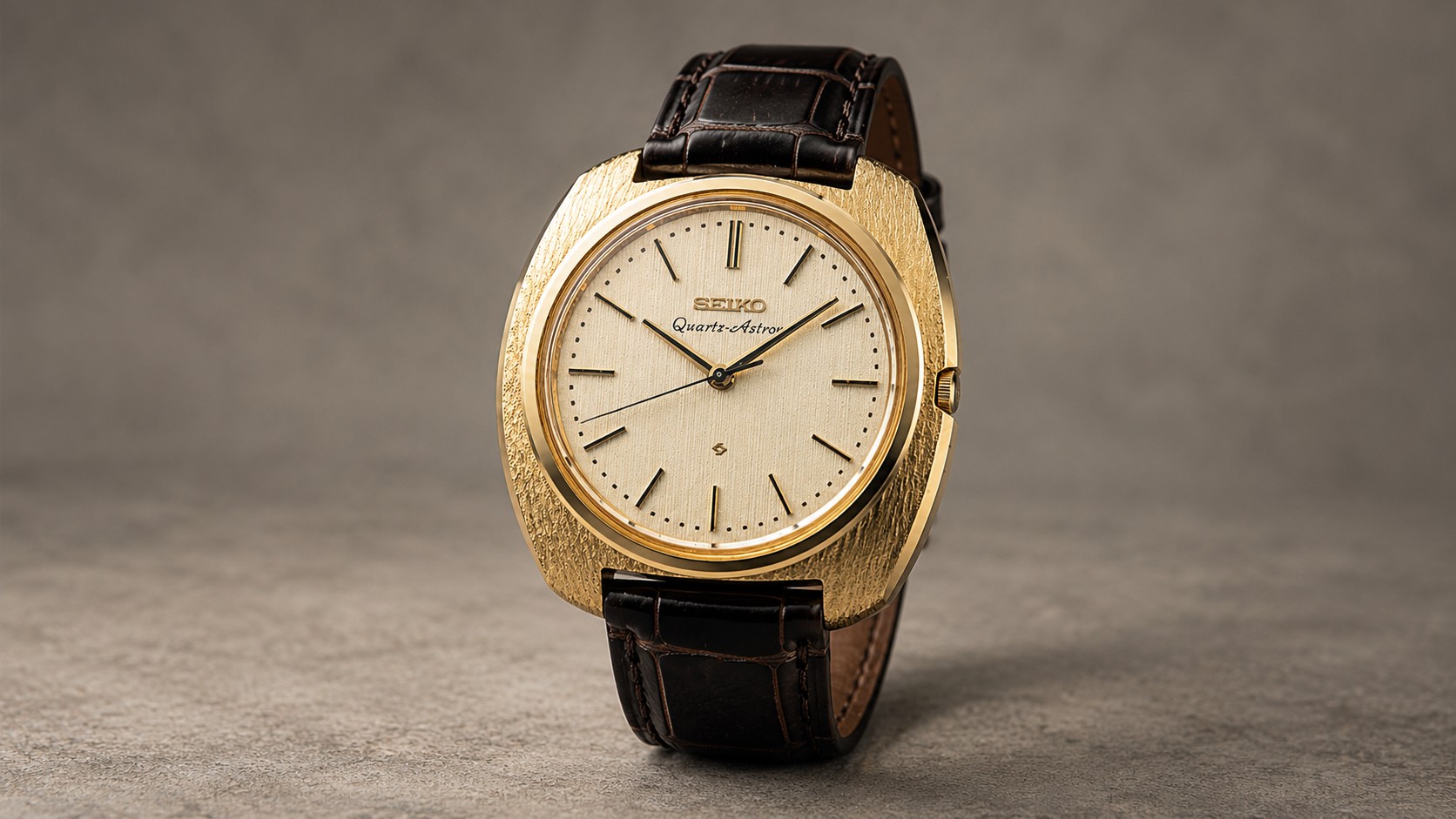
On 25 December 1969, Seiko introduced the Quartz Astron 35SQ, the world's first commercially available quartz wristwatch. It was an important moment in watchmaking, bringing a new level of accuracy to a technology that would soon reshape the entire industry.
The idea behind quartz timekeeping was different from the traditional mechanical approach. Instead of relying on a balance wheel and a complex arrangement of gears, the Astron used a battery-powered electronic circuit and a quartz crystal to regulate time. A step motor then moved the hands around the dial.
The Astron was expensive, costing 450,000 Japanese yen at launch, roughly the price of a small car in Japan at the time. It was not designed as an affordable everyday watch. Its significance lay in what it demonstrated: a wristwatch could be exceptionally accurate without relying on a mechanical movement.
The technology behind the revolution
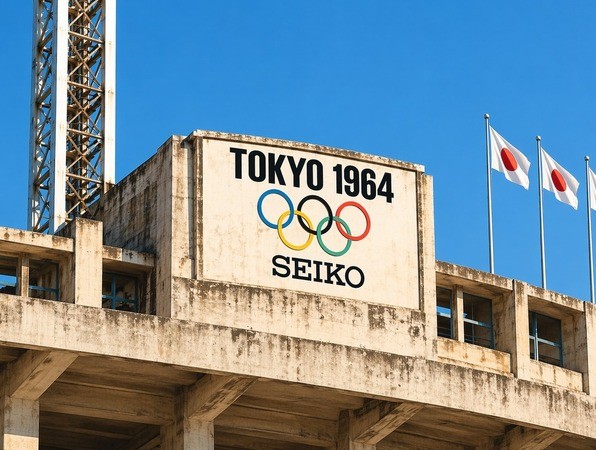
Seiko's move towards quartz timekeeping did not happen overnight. In 1964, the company supplied timing equipment for the Tokyo Olympic Games, where accurate and reliable measurement was essential across a wide range of events.
The experience helped Seiko develop its expertise in electronic timekeeping. The company worked on increasingly compact timing devices, exploring how electronic technology could measure time with greater precision than traditional mechanical systems.
At the heart of quartz timekeeping was a small crystal that vibrates at a highly stable frequency when an electrical current passes through it. An electronic circuit uses those vibrations to regulate time, while a step motor moves the watch hands.
Turning that principle into a practical wristwatch required years of engineering. The original Quartz Astron used a hybrid integrated circuit, a significant technical achievement at a time when electronic components were still relatively large. The 35SQ brought this new approach to timekeeping from specialist equipment to the wrist.
A new standard for accuracy
The Quartz Astron offered a level of accuracy that traditional mechanical watches struggled to match. Seiko stated an accuracy of approximately 0.2 seconds per day, or five seconds per month. For a wristwatch, this was a significant step forward.
Yet the real breakthrough was not accuracy alone. Quartz technology offered a different way to produce reliable timekeeping, with fewer moving parts than a conventional mechanical movement and the potential for large scale manufacturing.
Seiko continued to develop the technology after the Astron's debut. In 1973, the company introduced a digital quartz watch with an LCD display, showing that electronic timekeeping could change not only the movement inside a watch, but also the way time was displayed.
As quartz watches became more affordable and widely available, the consequences reached far beyond Seiko. Swiss manufacturers faced growing pressure to adapt to a market increasingly shaped by accuracy, cost and industrial scale.
The crisis that changed the watch industry
As quartz technology developed, watches became increasingly accurate and less expensive to produce. Japanese manufacturers, including Seiko, helped bring this technology to a wider market, challenging the position of Swiss brands that had long dominated mechanical watchmaking.
The pressure on Switzerland was not caused by quartz alone. Economic instability, a strong Swiss franc, rising production costs and changing consumer demand all contributed to the industry's difficulties during the 1970s and early 1980s.
Many traditional manufacturers struggled to adapt. Mechanical watches faced a new kind of competition, while quartz movements offered accuracy and convenience at prices that had previously been difficult to match. The industry's existing structures were increasingly put under pressure.
The response would take different forms. Some companies concentrated on improving quartz technology, while others began to reposition mechanical watches as products valued for their craftsmanship, heritage and design. The launch of Swatch in 1983 became one important part of the Swiss industry's wider effort to recover.
From a single breakthrough to a new era
As quartz technology matured, its impact extended beyond accuracy. Manufacturers could produce reliable movements at different price points, opening the door to watches for a much broader market.
This shift changed what buyers expected from a watch. Quartz watches offered accuracy and convenience with less need for movement regulation than traditional mechanical watches. Quartz gradually became a practical choice for everyday timekeeping.
The consequences reached far beyond Japan. Established manufacturers had to reconsider their products, production methods and position in the market. Some struggled to adapt, while others invested in quartz technology or looked for new ways to distinguish mechanical watches.
The Swiss response took several forms. The launch of Swatch in 1983 became one important part of the industry's recovery, combining quartz technology with colourful designs and accessible pricing.
Seiko had helped demonstrate the potential of quartz. The wider industry now had to decide how to respond to a technology that had changed the expectations of watch buyers.
The industry never went back
When Seiko introduced the Quartz Astron in December 1969, it was an expensive watch produced in limited numbers. Its importance was not that everyone could suddenly afford quartz timekeeping, but that it demonstrated what a wristwatch could become.
Over the following decades, quartz technology spread across the industry. Watches became more accurate and quartz movements increasingly accessible. What began as a major technological achievement gradually became an everyday option for millions of people.
The consequences were particularly severe for Swiss watchmaking. Quartz exposed weaknesses in an industry facing economic pressure and changing consumer demand. Some traditional manufacturers failed, while others adapted by embracing new technology or placing greater emphasis on the craftsmanship and heritage of mechanical watches.
Seiko continued to explore what electronic timekeeping could offer. In 2012, it introduced the Seiko Astron GPS Solar, a modern watch capable of adjusting its time using GPS signals and drawing power from light. It shared a name with the original Astron, but represented another stage in the evolution of precision timekeeping.
Today, mechanical watches remain highly valued, not simply because of their ability to tell time, but for their engineering, design and traditional craftsmanship. Quartz watches, meanwhile, remain central to everyday timekeeping. Both have a place in the modern industry.
The Quartz Astron did not single-handedly transform watchmaking. It did, however, mark a turning point. Seiko helped demonstrate that the future of the wristwatch did not have to be mechanical, and the industry was changed by what followed.