How Racing Made TAG Heuer
The Formula 1 collection arrived in 1986, but TAG Heuer's connection with racing had already been developing for decades.
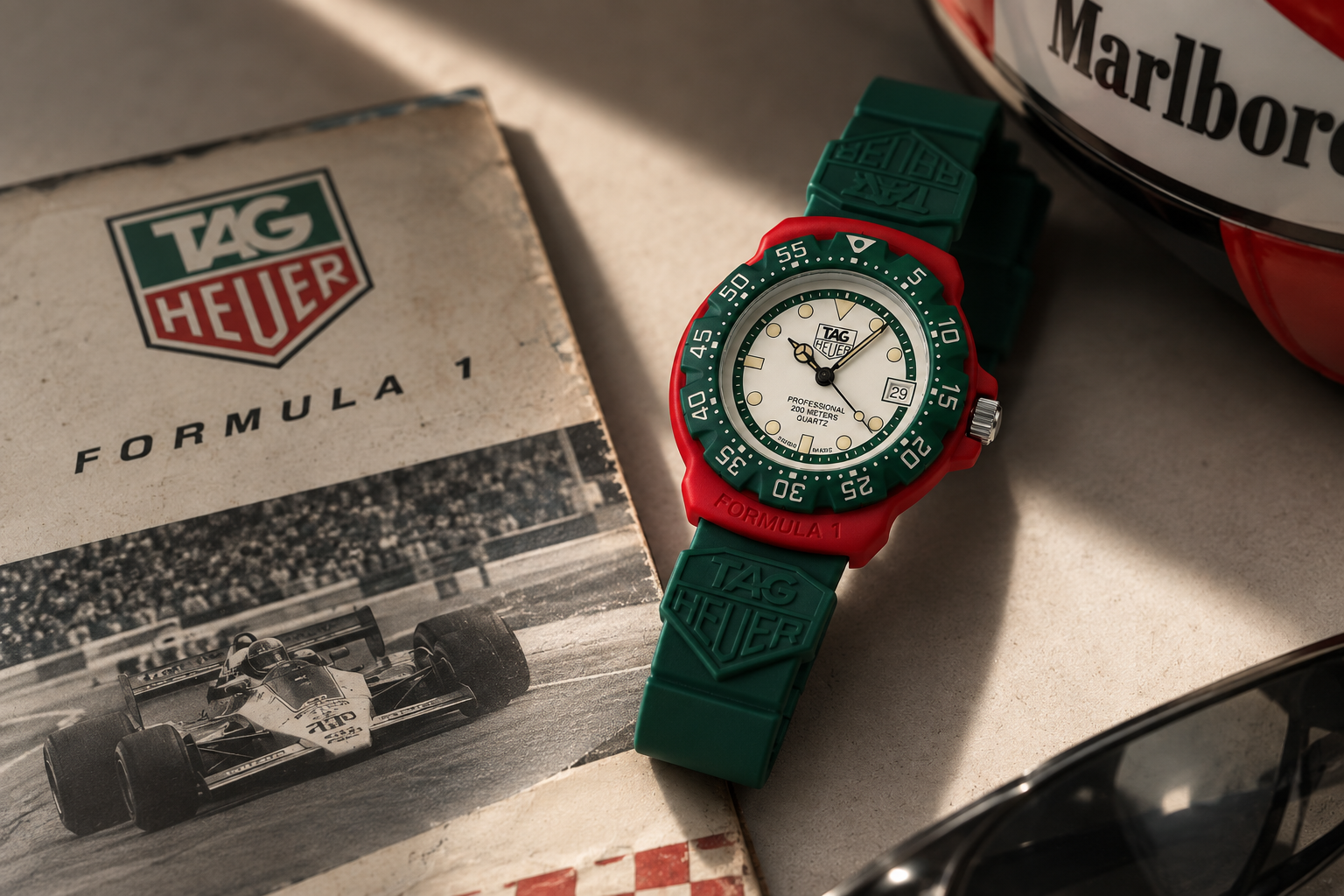
The Formula 1 watch did not create TAG Heuer's connection with motorsport. By the time the collection appeared in 1986, Heuer had already spent decades working with racing drivers, teams and professional timing equipment.
Under Jack Heuer, the company became increasingly involved with chronographs, stopwatches and dashboard timers during the 1960s. Racing was becoming an important part of the business, both on the wrist and at the track.
The story that followed would connect Heuer with Formula 1, Ferrari and professional racing technology before TAG ever appeared on the dial. The Formula 1 would eventually become one of the clearest expressions of that history.
When Heuer reached the Formula 1 grid
In 1969, Heuer began sponsoring Swiss Formula 1 driver Jo Siffert. His Lotus 49 carried the Heuer logo, making Heuer the first non automotive company to have its logo displayed on a Formula 1 car.
The partnership made sense for a company already deeply involved in timing. Heuer's watches and stopwatches were being used in racing, while its name was becoming visible alongside the drivers and cars themselves.
Siffert's connection with Heuer placed the company directly inside the Formula 1 environment. Racing was not simply a backdrop for the watches. Precise timing was already central to what Heuer did.
Two years later, that connection would become even deeper when Heuer began working with Ferrari.
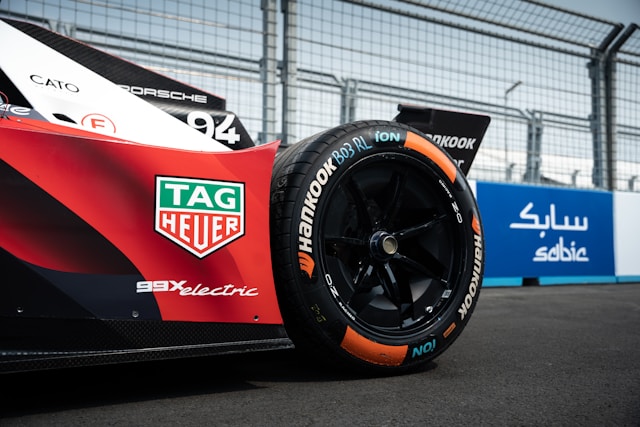
When timing became part of the racing operation
In 1971, Heuer became a sponsor and official timekeeper of Ferrari. Drivers including Mario Andretti, Jacky Ickx, Niki Lauda, Clay Regazzoni and Gilles Villeneuve were associated with Heuer during this period.
The relationship went beyond the watches worn by the drivers. Heuer was also developing professional timing equipment for motorsport, bringing its technical work directly into the racing environment.
The Le Mans Centigraph was one example. Introduced in 1971, the electronic system could follow several cars and measure their times to 1/1,000 of a second. A version was installed at Ferrari's Fiorano test circuit.
Racing was therefore more than a marketing setting for Heuer. Timing itself had become part of the company's involvement in professional motorsport.
From Heuer to TAG Heuer
While Heuer continued its connection with racing, Techniques d'Avant Garde, better known as TAG, was building its own relationship with Formula 1. At the end of 1981, TAG acquired 50 percent of McLaren International.
TAG also financed the development of the Porsche designed 1.5 litre turbocharged engine used by McLaren in Formula 1. The partnership quickly proved successful, with McLaren winning the Formula 1 World Championship in 1984 and 1985.
In 1985, TAG acquired Heuer. The new company brought together Heuer's long history in watchmaking and professional racing timing with TAG's own involvement in Formula 1 engineering and McLaren.
It was the combination of these two histories that created the setting for what came next.
Then came the Formula 1
In 1986, TAG Heuer introduced the first Formula 1 collection. It was a sharp departure from the mechanical chronographs that had defined Heuer during the previous decades.
The first watches were colourful quartz models with fiberglass outer cases. They were offered in 28mm and 34mm sizes, with bright colours appearing across the cases, bezels and dials.
The Formula 1 was also positioned at a much more accessible price. Instead of targeting the traditional mechanical watch buyer, TAG Heuer created something younger and simpler.
The name Formula 1 reflected the company's racing connections. TAG Heuer was closely associated with the Marlboro McLaren Formula 1 team, while Heuer's racing history already stretched back to the late 1960s.
The important detail is the order of events. The Formula 1 did not create TAG Heuer's racing identity. It gave an existing racing history a new expression on the wrist.
Racing came first
The Formula 1 eventually became one of the most successful products of the modern TAG Heuer era. According to TAG Heuer, more than three million examples of the first generation were sold before it left the collection in 2000.
The collection returned in 2004, but the racing story continued beyond the Formula 1 itself. In 1987, Formula 1 champion Ayrton Senna became closely associated with the TAG Heuer S/el and worked with the company on its distinctive bracelet.
The S/el was later renamed Link, while later projects continued to explore the relationship between watchmaking and motorsport. The Monaco V4, introduced in 2004, used belts instead of a traditional gear train and drew inspiration from racing machinery.
All of this makes the Formula 1 more interesting in context. Its racing identity was not invented for a new collection in 1986. Heuer had already been working with drivers, teams and professional timing equipment for decades.
TAG then brought its own Formula 1 history through McLaren. When the two companies came together, the racing connection was already deeply established.
The Formula 1 was the result of that history, not the beginning of it.