The Story of the Omega Speedmaster
Introduced in 1957 as a professional chronograph, the Speedmaster found its place in history somewhere Omega could never have planned for: space.
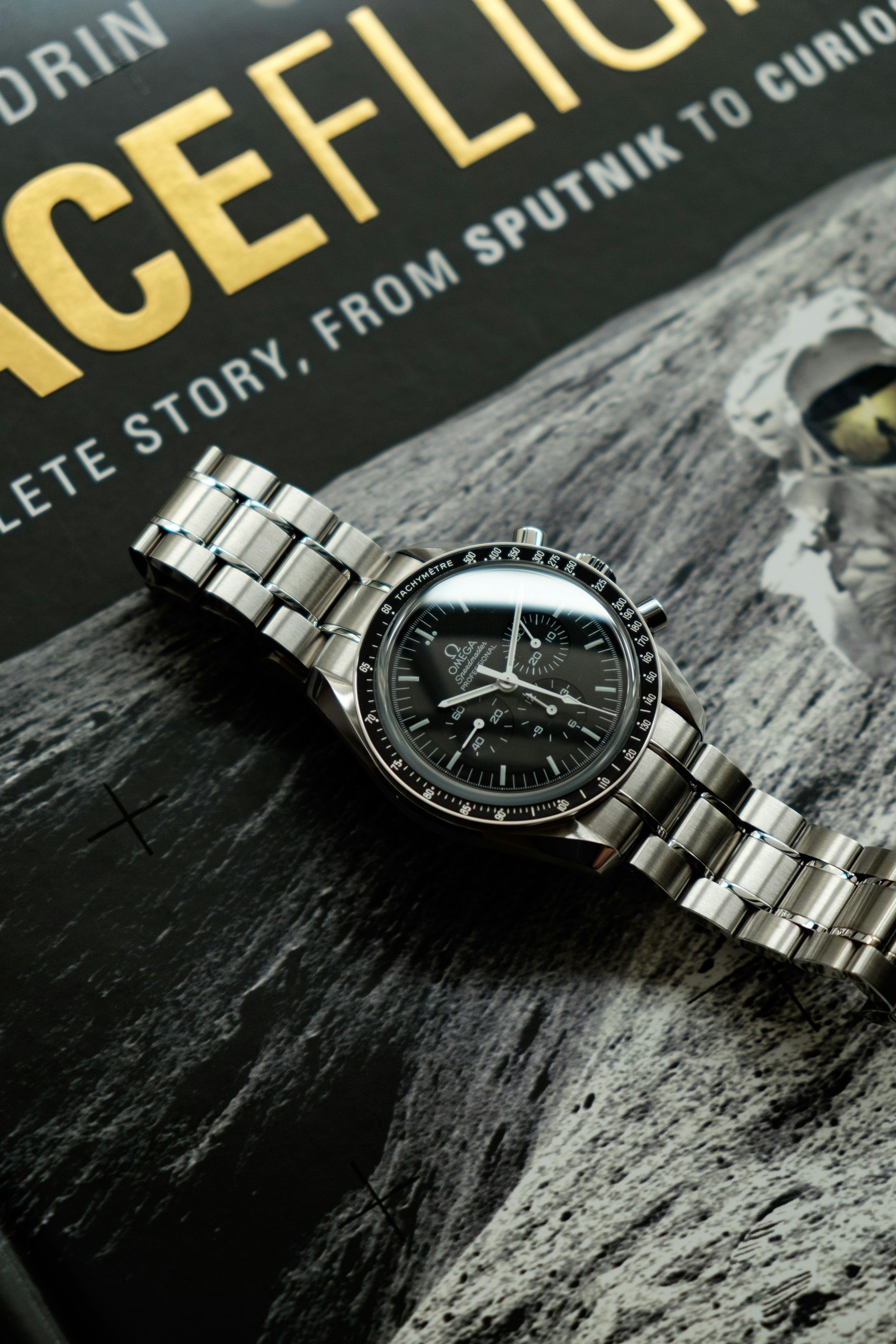
Before the Moon, before NASA and before the word Moonwatch meant anything, there was simply the Speedmaster.
Omega introduced the Speedmaster in 1957 as a professional chronograph. Its original world was not space exploration, but timing, speed and motorsport.
The first model, reference CK2915, placed its tachymeter scale on the bezel rather than crowding it onto the dial. It became one of the defining features of the Speedmaster and helped give the watch the clear, instrument-like layout that remains familiar today.
Those early watches already established much of the basic Speedmaster formula. A highly legible chronograph display, three sub-dials and a tachymeter bezel gave the watch a recognisable identity years before it became associated with astronauts.
Nothing about the original Speedmaster suggested that it was being designed for spaceflight. Its connection with NASA came later, and not because Omega had created a special watch for the American space programme.
The Speedmaster reached space before NASA chose it
The first Speedmaster worn in space was not issued by NASA. It belonged to astronaut Walter Schirra.
Schirra wore his personal Speedmaster CK2998 during the Mercury-Atlas 8 mission in October 1962. At the time, the watch was still a commercially available Omega chronograph with no official role in the American space programme.
Its presence on Schirra's wrist was therefore quite different from the Speedmasters that would follow. He had chosen the watch himself, before NASA formally selected a chronograph for its astronauts.
Within a few years, that informal connection between the Speedmaster and spaceflight would become official.
NASA needed a chronograph for its astronauts
As NASA prepared for the Gemini programme and the increasingly demanding missions that would follow, it needed a wrist chronograph suitable for use by astronauts.
Candidate watches were subjected to environmental testing that exposed them to extreme temperatures, vibration, shocks and other demanding conditions. The Speedmaster was the only chronograph tested that successfully met NASA's requirements.
In 1965, NASA qualified the Omega Speedmaster for manned space missions. The watch had not been developed specifically for the agency. NASA had tested an existing commercial chronograph and selected it on the basis of its performance.
Apollo 11 changed the Speedmaster forever
By the time Apollo 11 launched in July 1969, the Speedmaster had already been used throughout NASA's crewed space programme. The first lunar landing, however, gave the watch the association that would define it for generations.
Neil Armstrong and Buzz Aldrin both travelled to the lunar surface with NASA-issued Speedmasters. Armstrong left his watch inside the Lunar Module as a backup timing device after an onboard timer developed a problem.
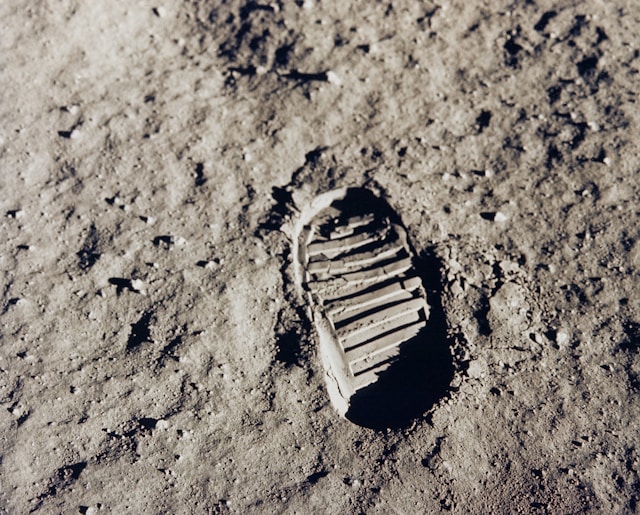
When Aldrin stepped onto the lunar surface, his Speedmaster was strapped over the sleeve of his spacesuit. It became the first watch worn on the Moon.
The achievement was remarkable partly because the watch had never been designed with the Moon in mind. The basic Speedmaster concept had been created twelve years earlier as a professional chronograph for an entirely different environment.
Apollo 13 gave the Speedmaster another role in space history
Less than a year after the first lunar landing, Apollo 13 provided a very different chapter in the Speedmaster story.
An oxygen tank explosion forced the crew to abandon the planned Moon landing and concentrate on returning safely to Earth. With electrical power being carefully conserved, the astronauts could not rely on all of the spacecraft's normal systems.
During the return journey, the crew needed to perform a manually timed engine burn to help correct the spacecraft's trajectory. A Speedmaster was used to time the burn.
The episode showed why NASA had required astronauts to carry a mechanical chronograph in the first place. The watch was independent of the spacecraft's electrical systems and could still perform its basic function when other resources were limited.
More than six decades of the same basic idea
The Speedmaster did not disappear when the Apollo programme ended. The watch remained connected with human spaceflight, while Omega continued to develop the wider Speedmaster collection in numerous directions.
The Moonwatch itself has changed more carefully. Modern versions benefit from updated movements, materials and manufacturing, but the familiar ingredients remain: a black dial, three chronograph registers, a tachymeter bezel and a manually wound mechanical movement.
That continuity is a large part of the watch's appeal. A modern Speedmaster Professional is not identical to the watches used during the Apollo era, but the relationship between them is immediately visible.
The history may be what first draws people to the Moonwatch, but the original design has proved remarkably durable on its own. The basic layout established during the early years of the Speedmaster still looks coherent more than six decades later.
Few watches can point to a history that includes motorsport, NASA qualification and the first lunar landing. Fewer still have carried that history without allowing it to completely overshadow the watch itself.
It started as a professional chronograph. The Moon made it an icon.